Skip to content

FIND THE RIGHT KIND OF PRACTICE

Logic & deduction

Use clues and constraints to justify a choice.

Deduction uses information already available to narrow down possible choices. A strong explanation identifies the clue and shows why a different choice would not fit.

These games support reasoning rather than serving as arithmetic quizzes. In hidden-information games, distinguish a justified deduction from a guess; in a constraint puzzle, explain which requirement a move satisfies.

How to choose

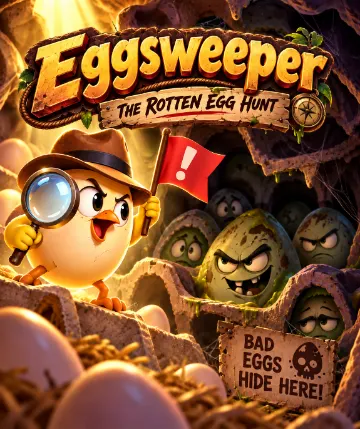
  • EggsweeperUse numbered safe-cell clues to reason about neighboring hidden cells.
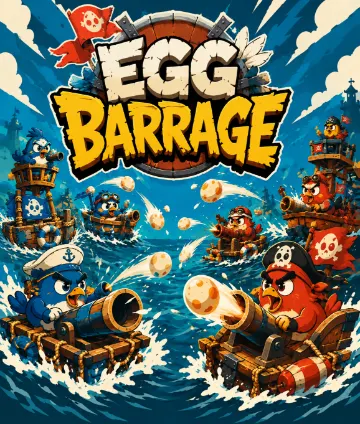
  • Egg BarrageUse hit and miss feedback to plan searches on the enemy grid.
  • Cascade TheoryPredict swaps and cascades that create straight groups totaling ten.

A suggested discussion

ask for a reason before one move, then review whether the feedback supports it.

  • Which clue supports this choice?
  • Can you rule out any alternatives?
  • Are you certain, or are you making a guess?

Adapt this suggestion to your learner. It is not an implemented game feature or curriculum standard.
Games connected with logic & deduction

8 games

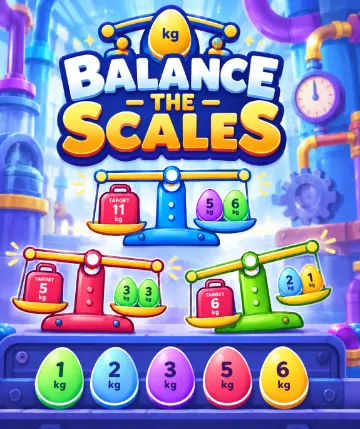
Balance the Scales game artwork

Equality & balance

Balance the Scales

Plan how to divide one shared tray of weighted eggs so that all three scales equal their targets.

  • Build exact sums from several addends
  • Find the difference between a current total and a target
  • Plan three disjoint groups using a shared set of numbers

Ready for: Add small whole numbers

Math with movement or planning
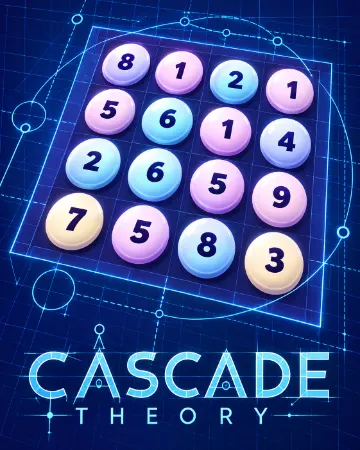
Cascade Theory game artwork

Number bonds & target sums

Cascade Theory

Swap neighboring eggs to make straight groups totaling ten. Cleared eggs fall and can set off more clears; aim to empty the board in twenty moves.

  • Identify adjacent numbers that total ten
  • Predict the result of swapping two neighboring positions
  • Consider how gravity and column movement change the next board

Ready for: Add small whole numbers to ten

Math with movement or planning
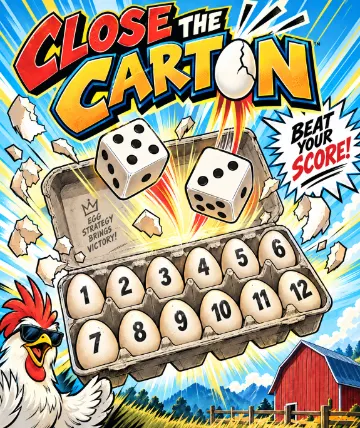
Close the Carton game artwork

Addition

Close the Carton

Roll two dice, then close a group of numbered eggs whose values make the rolled total. Try to leave the smallest total behind.

  • Add two dice values
  • Find different groups with the same sum
  • Compare the remaining options before choosing a group

Ready for: Read the numbers 1 to 12

Math with movement or planning
Egg Barrage game artwork

Spatial reasoning & planning

Egg Barrage

Read an ordered pair, fire at that location and use hit-and-miss clues to find the hidden enemy fleet.

  • Read coordinates in X, Y order
  • Locate positions on a numbered grid
  • Use previous shots to plan a search

Ready for: Recognize the numbers 0 to 5

Math with movement or planning
Egg Conveyor game artwork

Addition

Egg Conveyor

Catch numbered eggs from a moving conveyor and put together the target sum. Exact cartons keep the run going; three overshoots end it.

  • Keep a running sum of selected values
  • Find the amount still needed to reach a target
  • Choose a combination from the values currently available

Ready for: Read whole numbers

Math with movement or planning
Egg Pop game artwork

Spatial reasoning & planning

Egg Pop

Aim coloured eggs with a cannon angle shown in degrees, bank shots off side walls, and connect groups of at least three matching colours. This introduces angle measurement alongside spatial planning; clear the board to advance automatically.

  • Introduction to angles measured in degrees
  • Predict shot paths and wall reflections
  • Identify connected colour groups

Ready for: Distinguish the egg colours

Math with movement or planning
Eggsweeper game artwork

Logic & deduction

Eggsweeper

Use nearby-egg counts to uncover every safe nest while keeping the rotten eggs covered.

  • Count the eight neighboring positions, including diagonals
  • Use a clue and known flags to deduce hidden cells
  • Explain when a reveal is guaranteed safe

Ready for: Recognize numbers from 1 to 8

Reasoning & strategy
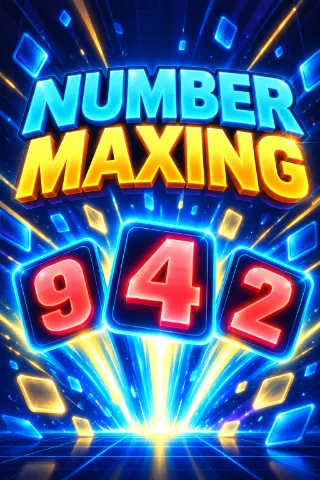
Number Maxing game artwork

Place value & ordering

Number Maxing

Reveal three digits one at a time and lock each into a place. Build the largest numbers you can across five rounds without knowing the next digit.

  • Use hundreds, tens, and ones to compare numbers
  • Arrange revealed digits into a three-position number
  • Make a placement decision with incomplete information

Ready for: Read digits 0 to 9

Math with movement or planning