Plan positions, paths, collisions and changes to a board.
Spatial reasoning considers where objects are, how they move, and what a board will look like after a choice. Some games combine it with arithmetic; others are primarily visual planning challenges.
Choose deliberately between a slow board puzzle and a moving game. Speed, aim and steering can add a motor demand that is separate from the mathematical discussion.
How to choose
- Egg PopPlan color matches, wall bounces and connections to the top of a board.
- Egg PoolCombine complement values with cue-ball aim and collision planning.
- 2048Predict how a whole-board slide changes positions and possible merges.
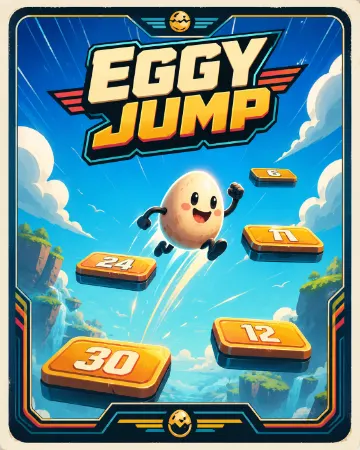
- Eggy JumpPlan landings while steering a continuously moving character.
A suggested discussion
predict the position after a move, then compare the prediction with what happened.
- Where will the object or tile move?
- What obstacle or collision matters?
- Would the same plan work if the board were reflected or rearranged?
Adapt this suggestion to your learner. It is not an implemented game feature or curriculum standard.